
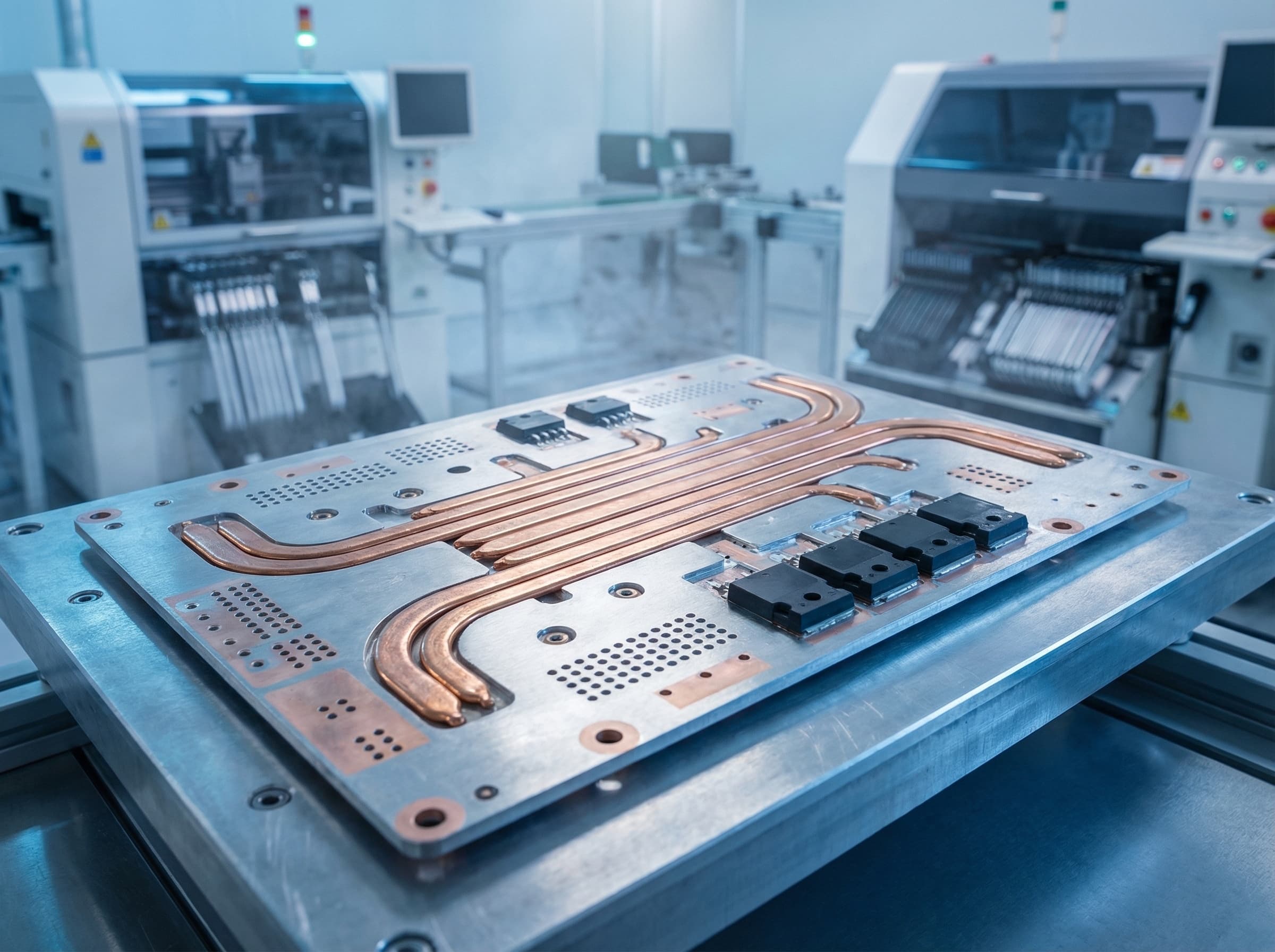
High thermal conductivity aluminum PCBs push IMS (Insulated Metal Substrate) technology to its performance limits, using ceramic-filled dielectric systems to achieve thermal conductivities of 3.0 to 10.0 W/m·K—three to ten times the performance of standard aluminum PCB dielectrics. XinAn PCB manufactures these boards for applications where extreme thermal dissipation density is non-negotiable: high-power LED arrays exceeding 50W, IGBT and power MOSFET mounting substrates, and laser diode driver circuits. The ceramic-filled dielectric maintains electrical isolation above 4kV while reducing the thermal resistance between the copper circuit layer and the aluminum heat spreader to values approaching those of direct-bonded copper (DBC) substrates, but at a fraction of the cost and with the full routing flexibility of a printed circuit board.

XinAn PCB
High Thermal Aluminum PCB
Premium Thermal Performance
Premium Thermal Performance
High Thermal Aluminum PCB
Ceramic-filled high thermal conductivity aluminum PCBs (3-10 W/m·K) for demanding thermal applications in high-power LED, automotive, and industrial sectors.
Layers
1
Material
Aluminum (High-Tg ceramic-filled)
Thickness
0.8 - 3.0mm
Copper Weight
1 - 6oz
Max Size
650 × 2000mm
Min Trace/Space
4/4 mil
Min Drill
0.3mm
Thermal Conductivity
3.0 - 10.0 W/m·K
Surface Finish
HASL, Lead-free HASL, ENIG
Solder Mask
white
Silkscreen
black
Technical Specifications
High thermal dielectrics achieve their performance through maximum loading of ceramic filler particles—typically aluminum nitride (AlN), boron nitride (BN), or silicon carbide (SiC)—in a modified epoxy or polyimide matrix. At 3.0 W/m·K, the filler loading is approximately 60-70% by volume using aluminum oxide particles. At 8.0-10.0 W/m·K, the dielectric transitions to aluminum nitride or boron nitride fillers at 80%+ loading, requiring specialized compounding and coating equipment to maintain uniform particle distribution. The dielectric layer thickness for high-thermal grades is typically 75-100μm—thinner than standard IMS dielectrics—to minimize thermal resistance. At 75μm thickness, a 10.0 W/m·K dielectric achieves thermal resistance of 0.075°C·cm²/W, which translates to a component-to-heatsink thermal path of approximately 0.3°C/W for a typical power pad footprint. Breakdown voltage remains above 4kV despite the thin dielectric, verified on 100% of production panels.
Fabricating high-thermal aluminum PCBs requires process adaptations to accommodate the hard, abrasive ceramic-filled dielectric. Drilling through the dielectric dulls standard carbide drill bits rapidly; we use diamond-coated bits or dedicated drill stacks with reduced hit counts to maintain hole quality. Laser scoring and routing generate less mechanical stress than conventional CNC routing and are preferred for thin dielectric constructions where mechanical vibration could cause micro-cracking. Solder mask adhesion on ceramic-filled dielectrics is lower than on standard FR-4 surfaces, requiring plasma surface treatment or specialized adhesion promoters. The high filler content also makes the dielectric more brittle, so thermal cycling during assembly—especially multiple reflow passes—must be carefully profiled to avoid exceeding the dielectric's flexural strain limits. We specify maximum board flex of 0.5mm displacement under assembly handling to prevent dielectric fracture.
High thermal aluminum PCBs are specified wherever the thermal design pushes standard IMS materials beyond their capability. High-power LED arrays for projection lighting, UV curing systems, and horticultural grow lights generate heat flux densities exceeding 10W/cm², requiring 5.0+ W/m·K dielectric to keep LED junction temperatures within datasheet limits. Power module substrates for IGBT half-bridge configurations in solar inverters and industrial variable frequency drives (VFDs) use 8.0-10.0 W/m·K dielectrics as a cost-effective alternative to ceramic DBC substrates. Laser diode driver boards for fiber optic pump lasers and industrial cutting lasers demand the lowest possible thermal resistance to maintain wavelength stability. RF power amplifier pallets for broadcast transmitters and cellular base station PAs also benefit from high-thermal IMS construction to manage transistor dissipation.
Quality verification of high-thermal aluminum PCBs centers on confirming the dielectric's thermal performance matches the specified grade. We perform laser flash thermal diffusivity measurements per ASTM E1461 on coupon samples from each production lot, calculating thermal conductivity from measured diffusivity, density, and specific heat capacity. Results are reported within ±10% of the nominal thermal conductivity grade. Dielectric breakdown voltage is tested per IPC-TM-650 2.5.7 at a minimum of 4kV AC on 100% of panels, with hi-pot testing at 2× working voltage on each individual board. Thermal cycling reliability testing runs -40°C to +150°C for 1000 cycles per IPC-TM-650 2.6.7.2, with post-test microsection analysis examining the dielectric-to-copper and dielectric-to-aluminum interfaces for delamination or cracking. Peel strength testing confirms copper adhesion exceeds 0.8 N/mm after thermal stress.
Get Your PCB Quote
Upload your Gerber file | we reply within 24 hours.